When a Static Site Beats WordPress
WordPress isn't always the right tool. Here's how I decide when a simple static site is the better call.
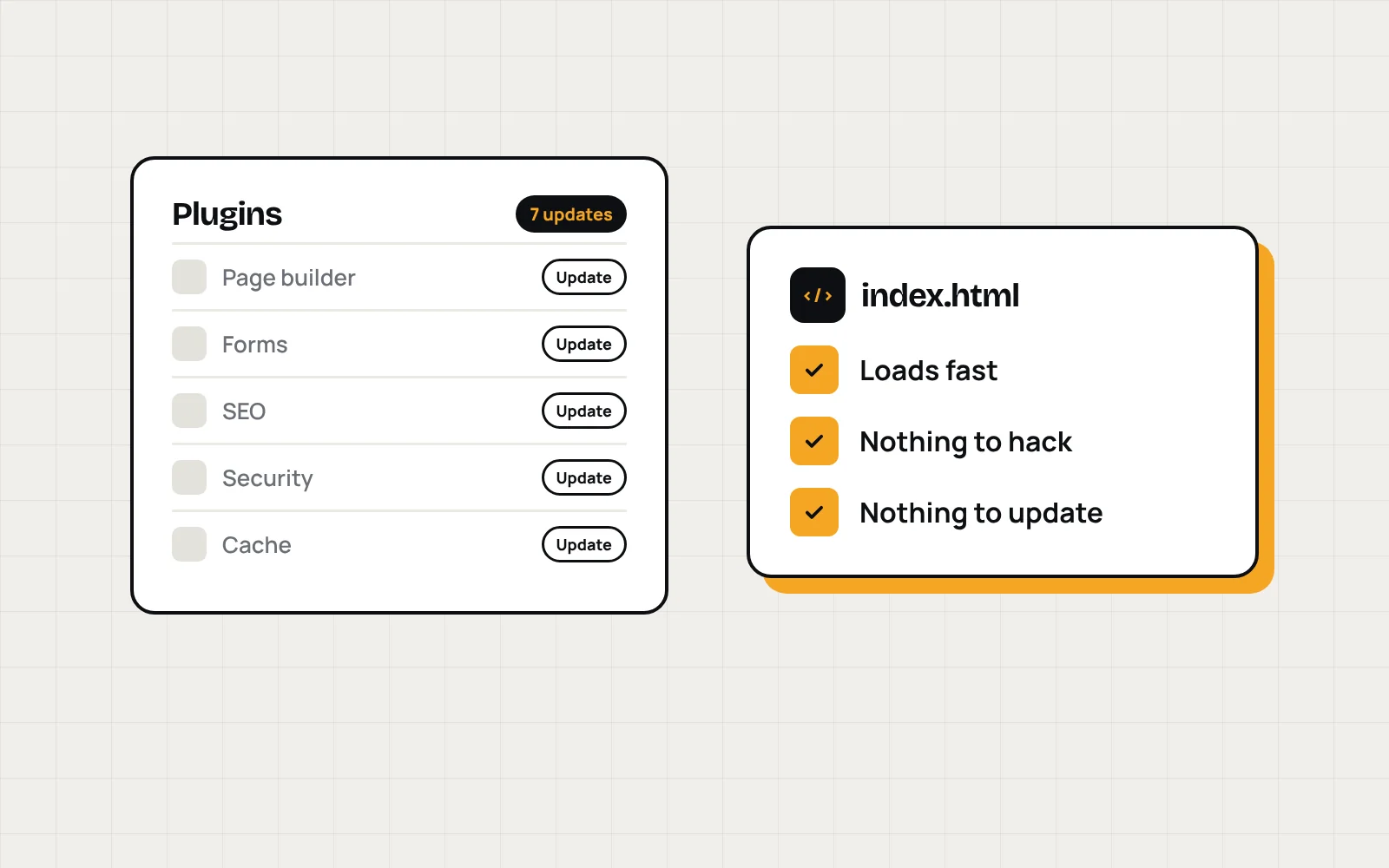
I build a lot of WordPress sites. It's flexible, clients know it, and there's a plugin for almost anything. But it isn't always the right tool, and lately I've been building more sites without it. This one included.
Here's how I decide.
What a static site is
A static site is just HTML, CSS, and images served as files. There's no database and no admin panel running behind it. Pages are built ahead of time, so when someone visits, the server just hands over the file.
That makes static sites fast, cheap to host, and very hard to hack. There's nothing to log into and nothing to update.
When static is the better call
- The site doesn't change often. A handful of pages that get updated a few times a year.
- Speed matters a lot, like landing pages for ads where a slow load costs you leads.
- Nobody on the client's team needs to edit it themselves.
- You want to stop paying for plugin licenses and stop worrying about updates.
When WordPress still wins
- The client wants to edit pages, add blog posts, or swap photos without calling anyone.
- The site needs features that already exist as solid plugins, like booking, ecommerce, or a members area.
- Several people on the team update the content.
The right platform is the one that fits how the site actually gets used after launch.
The middle ground
Static doesn't have to mean hard to update. Forms can still send leads through a small serverless function. Content can live in simple files that rebuild the site on every change, and hosts like Vercel and Netlify deploy those changes automatically.
For a lot of small business sites, that's plenty.
How I decide
I ask one question: after launch, who edits this site, and how often? If the answer is "the owner, every week," WordPress is the better fit. If it's "rarely, and we'd rather someone else handle it," a static site will be faster, safer, and cheaper to run.
Not sure which fits your business? Start a project at Novoslate and we'll figure it out together.